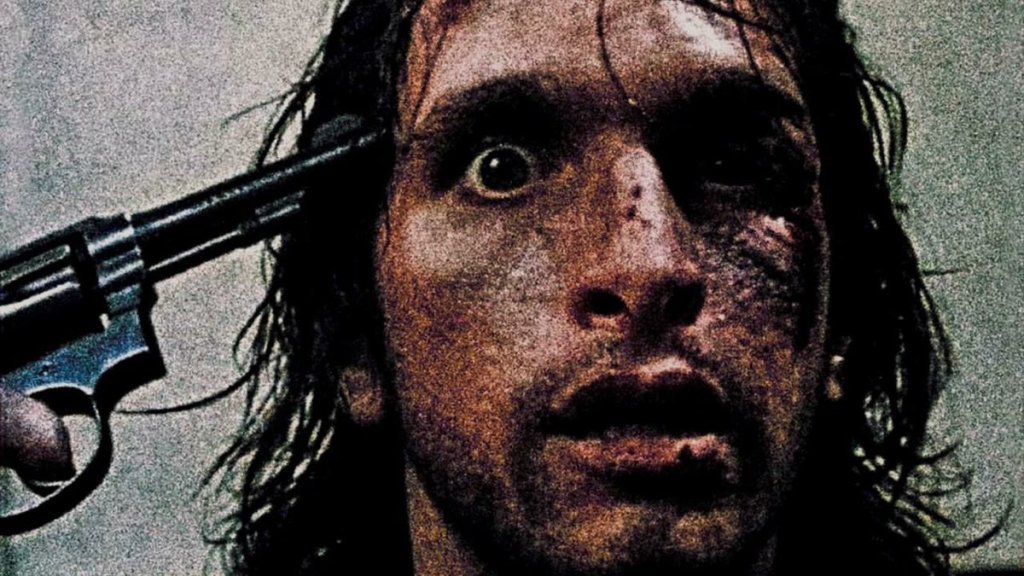
Think of Troma Entertainment, and you probably imagine over-the-top gore, puerile humour, outlandish violence, sex, grime, and sleaze. There’s a general air of fuckaboutery to their films, where the purpose is to make the dumbest film possible.
Combat Shock is something of an oddball in Troma’s catalogue then. Because, whilst it is all of those things, it’s also one of the most pitch black films ever made. This isn’t The Toxic Avenger kind of Troma, where the grime comes with punchlines and cartoon violence. This is Troma in pure misery mode: ugly, bleak, and completely disinterested in whether you’re having a good time.
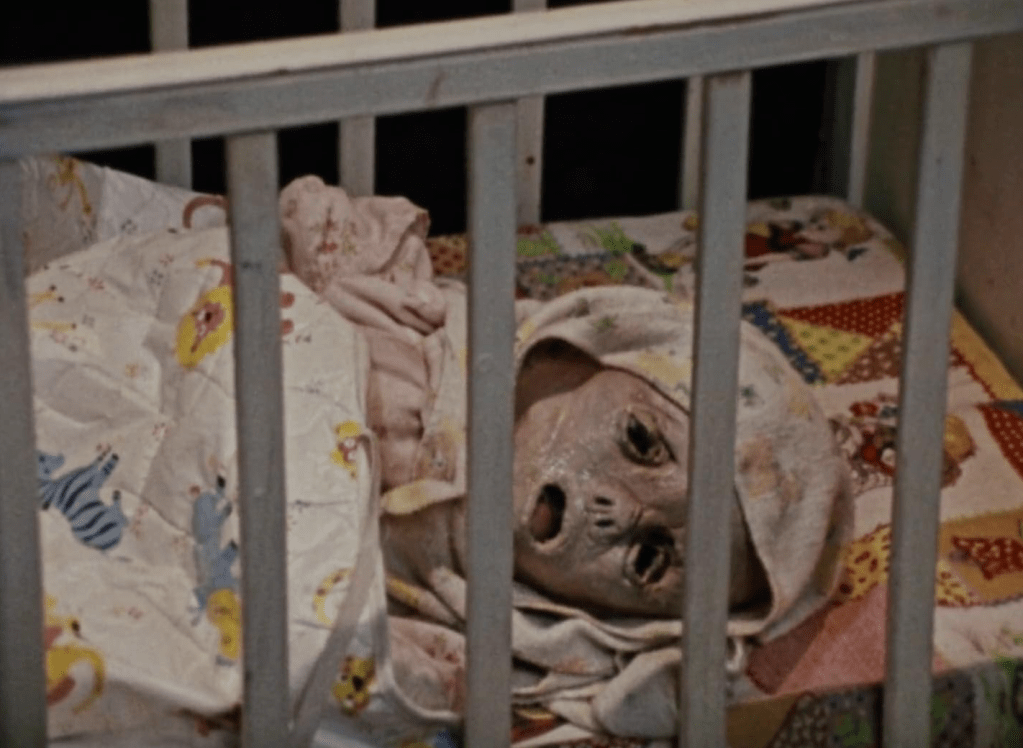
The film follows Frankie Dunlan, played with hollow-eyed exhaustion by Rick Giovinazzo, a Vietnam vet barely surviving in a rotting New York City tenement. Frankie lives with his forever dissatisfied wife, Cathy, and their severely deformed infant – who looks like the outcome of E.T. banging the Eraserhead baby. It’s implied that some nasty chemical used in Vietnam (such as Agent Orange) fried Frankie’s nads and that’s why the baby looks like that.
Life for Frankie has has gone catastrophically wrong and won’t stop getting worse. His days consist of trying to scrape together money and food, dealing with Cathy’s demands, and navigating a neighbourhood that feels openly hostile to human life. There’s no job stability, no support system, no safety net – just poverty, resentment, and the sense that the walls are closing in. Oh, and all this is set to a soundtrack straight out of a Leisure Suit Larry game.
Layered over Frankie’s miserable present are nightmarish flashbacks to his experiences in the Vietnam war. These scenes – which often come unbidden and linger a tad too long – are less like scenes from a war movie and more like the intrusive thoughts of a traumatised man. There’s no heroism on display, no battlefield spectacle – only confusion, grisly violence, and moral rot. These moments bleed into Frankie’s waking life, suggesting a man who never really left the war, only swapped one hell for another.
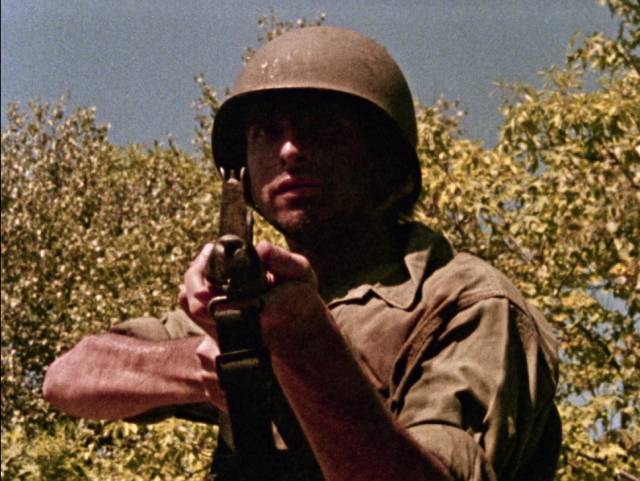
What’s funny, is that if you look up some of the posters for Combat Shock, they make it look like a Rambo film. You know, burly hero type who is allergic to shirts and whose gun has a gun. But, if this is any Rambo film, surely it’s First Blood. Both films have a main character suffering from PTSD struggling to return to a world that doesn’t actually seem to want them around.
Combat Shock’s world can only be described as antagonistic. Its cityscape is noisy, filthy, and indifferent. It probably doesn’t help that just about everyone we meet is some manner of scumbag, criminal, pimp, or prostitute. The bulk of the film is Frankie meeting these various characters and usually falling foul of some misfortune as a result.
The film starts ratcheting the tension through these small, grinding humiliations rather than big dramatic turns. Frankie tries to hold things together, but the movie makes it painfully clear that effort alone means nothing in a system designed to chew people up.
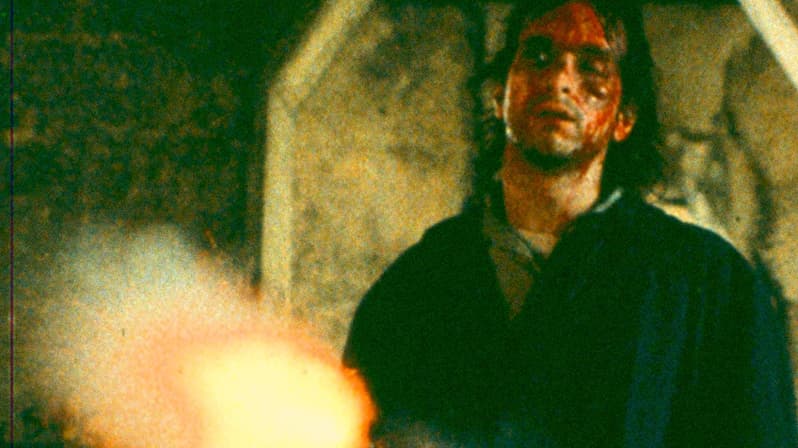
The final act is abrupt and devastating. After resorting to crime and ending up suffering one final humiliation at the hands of the film’s antagonists, Frankie finally snaps. The violence that erupts feels like a grim conclusion the film has been funneling toward since the opening frame. It’s sudden, brutal, and cold – not unlike films like Taxi Driver or Death Wish.
But the film continues and Frankie returns home. His flat is like a microcosm of the greater city – messy, joyless, and chaotic. And it is here that Frankie comes to the realisation that, like the villagers in Vietnam who killed themselves before the American soldiers could lay their hands on them, sometimes death is the only way to truly be safe in such a world. So he makes the ruthless decision to turn his gun on his family and then himself.
What makes Combat Shock so brutal is how utterly joyless it is. Even by exploitation standards, this thing is just merciless in kicking you in the balls. There’s no camp to hide behind, no ironic distance, no sense that the filmmakers are secretly laughing with you. It’s basically what you’d get if you played the average Troma film completely straight.
Combat Shock sits in that uncomfortable space where exploitation cinema brushes up against social realism. It’s ugly, upsetting, and relentlessly hopeless – but it’s also strangely compelling in its honesty.
It’s not exactly a film you “enjoy.” It’s more like something you endure. And when the film is over, you don’t really experience any release or catharsis. You just feel dirty. Like jizzing into a My Little Pony flannel.
 Midnight Cinema Junkyard
Leave a comment